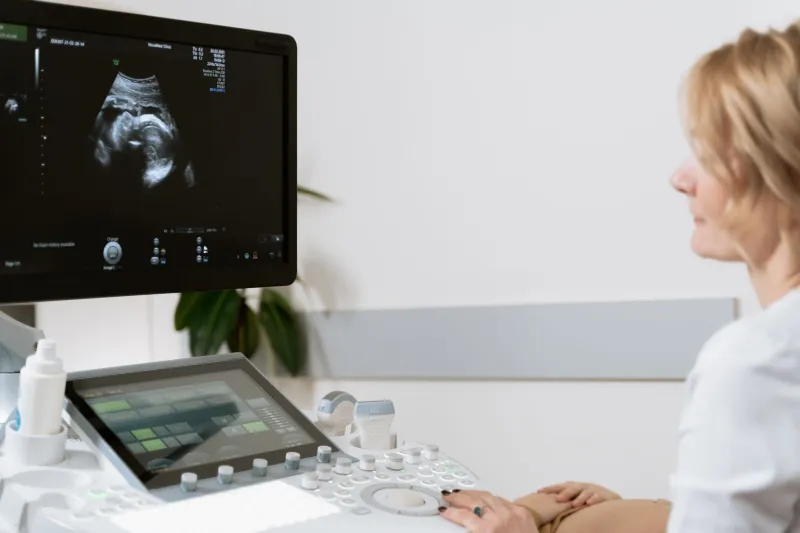
Logged Out of Care: How the Telehealth Revolution Left Millions of Americans Behind

In the spring of 2020, American healthcare underwent one of its most rapid transformations in living memory. Within weeks, regulatory waivers loosened longstanding restrictions on telemedicine, insurance reimbursement policies were rewritten, and millions of patients attended medical appointments from their kitchen tables for the first time. By mid-2020, telehealth utilization had increased by more than 4,000 percent compared to pre-pandemic baselines, according to data from the Department of Health and Human Services.
The narrative that emerged was one of democratization — a technological leap that would finally dissolve the geographic and logistical barriers that had long kept rural Americans, elderly patients, and those with mobility limitations from accessing timely care. It was a compelling story. It was also, for a significant portion of the American population, largely fictional.
The Infrastructure Gap That Policy Overlooked
Telehealth, at its most basic, requires a reliable internet connection, a compatible device, and the knowledge to use both. On each of these dimensions, access in the United States remains profoundly unequal.
According to the Federal Communications Commission's 2023 broadband data, approximately 21 million Americans lack access to fixed broadband at speeds sufficient for stable video conferencing — though independent researchers at BroadbandNow have argued the actual figure is closer to 42 million when accounting for methodological limitations in FCC reporting. Rural counties, tribal lands, and low-income urban neighborhoods bear a disproportionate share of this connectivity deficit.
Device access presents a parallel challenge. While smartphone ownership in the United States is relatively high across income groups, the quality and reliability of that access diverges sharply. Low-income households are significantly more likely to rely on smartphones as their sole internet-connected device, more likely to face data caps that make sustained video calls prohibitively expensive, and more likely to share devices among multiple family members — circumstances that make the private, uninterrupted environment a telehealth appointment requires difficult or impossible to achieve.
Then there is the question of digital literacy. Navigating a patient portal, downloading a telehealth application, troubleshooting an audio connection, and managing video conferencing software are tasks that many Americans — particularly those over 65, those with limited formal education, and those for whom English is not a first language — find genuinely challenging. A 2021 survey by the National Council on Aging found that 40 percent of adults over 60 reported difficulty using video-based telehealth platforms, even when they had access to the necessary technology.
The Paradox of Expanded Access
Here lies the central tension: the communities that stood to benefit most from telehealth expansion — rural residents hours from the nearest specialist, low-income patients who cannot afford to miss work for in-person appointments, individuals with chronic conditions requiring frequent monitoring — are often the least positioned to take advantage of it.
In practice, the patients most successfully integrated into telehealth platforms tend to be urban, educated, privately insured, and already engaged with the healthcare system. A 2022 analysis published in JAMA Network Open found that telehealth utilization during the pandemic was significantly higher among patients with higher household incomes and lower among patients on Medicaid — precisely inverting the equity gains the technology was supposed to deliver.
This dynamic has real clinical consequences. When a patient in rural Appalachia cannot reliably connect to a behavioral health provider via video, and the nearest in-person psychiatrist is a three-hour drive away, the gap between policy aspiration and lived reality is not a minor inconvenience. It is a treatment void.
What "Rural" Really Means in American Healthcare
Approximately 46 million Americans live in rural areas, representing roughly 14 percent of the population. These communities already faced significant healthcare access challenges before telehealth entered the conversation: rural hospitals have been closing at an accelerating rate, with more than 140 closures since 2010 according to the Chartis Center for Rural Health; rural areas have lower physician-to-patient ratios than urban centers; and rural patients are statistically more likely to present with the chronic conditions — diabetes, cardiovascular disease, substance use disorders — that benefit most from consistent, longitudinal care.
Telehealth, properly implemented, could address some of these challenges. Remote patient monitoring for diabetes management, telepsychiatry for behavioral health crises, and telecardiology consultations that allow rural patients to connect with urban specialists without long-distance travel all represent genuine opportunities. But each of these interventions requires the infrastructure preconditions that remain absent in too many communities.
The FCC's Affordable Connectivity Program, which provided low-income households with subsidies for broadband service and devices, offered a partial response to this challenge. However, the program's funding lapsed in June 2024 after Congress declined to appropriate additional resources, leaving an estimated 23 million households without the subsidies they had been relying upon — a policy retreat with direct implications for telehealth access.
Innovations Emerging From the Gap
Despite these systemic failures, a number of organizations and local governments have developed approaches worth examining.
Mobile health units with embedded telehealth capability have been deployed in rural counties across states including Montana, Mississippi, and New Mexico. These units bring broadband-connected, staffed facilities directly to underserved communities, allowing patients to conduct telehealth consultations with remote specialists from a supported environment.
Library and community center partnerships have emerged in several states, enabling patients to use high-speed internet and private consultation spaces in trusted public institutions. The American Library Association has documented dozens of such programs, noting that libraries represent one of the most equitably distributed digital infrastructure assets in the country.
Asynchronous telehealth models — in which patients submit symptom descriptions, photographs, and health data via secure messaging rather than live video — reduce the bandwidth requirements and scheduling complexity of synchronous video visits. These models have shown particular promise for dermatology, mental health check-ins, and chronic disease management.
Community health workers (CHWs) trained in digital health navigation are being deployed in several health systems to help patients set up accounts, troubleshoot technology issues, and understand how to use telehealth platforms effectively. Evidence from programs in Chicago, rural Georgia, and the Navajo Nation suggests CHWs can significantly increase telehealth engagement among previously disconnected populations.
The Policy Argument for Digital Health Equity
The case for treating broadband access as health infrastructure — rather than a consumer amenity — rests on straightforward epidemiological logic. If telehealth is now a standard modality of care delivery in the United States, then the absence of reliable internet access functions as a barrier to healthcare access in the same way that the absence of a nearby hospital does. It is a social determinant of health.
This framing has practical implications for federal and state policy. Infrastructure investment — including the $65 billion allocated for broadband expansion under the 2021 Infrastructure Investment and Jobs Act — must be implemented with healthcare access as an explicit priority, not an incidental benefit. Telehealth reimbursement policies should include provisions that incentivize providers to serve patients in digital-access deserts, and digital literacy programming should be embedded in community health initiatives with the same seriousness as nutritional education or smoking cessation support.
The expansion of telehealth represents one of the most significant structural changes in American healthcare delivery in decades. Whether it ultimately reduces or amplifies health disparities will depend entirely on whether the infrastructure and policy choices that follow are made with equity as a design principle rather than an afterthought.
At Santerise, we believe that access to quality health information and care should not be determined by the postal code on your billing address. The digital health revolution holds genuine promise — but only if it is built for everyone.